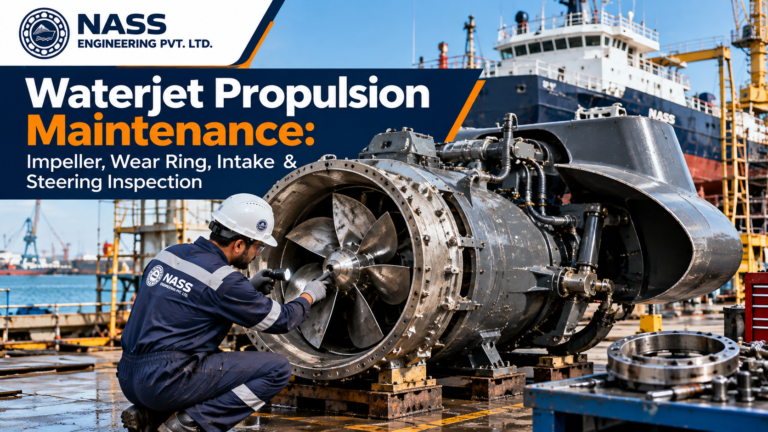
Waterjet propulsion is used on a range of high-speed and maneuverable vessels because it produces thrust by moving water through a pump and nozzle rather than by using an exposed propeller. The system can offer practical advantages in applications where maneuverability, shallow-water operation, protection from exposed propeller blades, or high-speed performance are important.
For operators, however, a waterjet is still a rotating propulsion machine with bearings, seals, shafting, an impeller, intake passages and steering and reversing components. Its reliability depends on keeping those components in acceptable condition and investigating changes in vibration, temperature, thrust, noise or steering response before they develop into major failures.
NASS Engineering Services Pvt. Ltd. states that it has a team for waterjet overhaul and routine maintenance. This article looks at the maintenance points that matter most when inspecting and servicing a marine waterjet system.
How Waterjet Propulsion Works
A typical waterjet arrangement draws water through an intake, accelerates the flow with an impeller or pump, and discharges it through a nozzle. Steering and reversing arrangements then alter the direction of the resulting jet or the vessel’s response to it.
The exact arrangement differs by waterjet manufacturer and model. Some systems integrate the intake, pump, nozzle, steering and reverse controls into a packaged propulsion unit. The service procedure must therefore be based on the installed equipment and the manufacturer’s documentation.
Why Waterjet Maintenance Matters
Waterjet propulsion systems operate in an environment that can introduce marine growth, debris, abrasive particles and other contaminants into the intake system. At the same time, rotating components are subject to mechanical loads and wear.
Regular inspection helps engineers identify:
- Impeller or pump damage
- Wear at clearances or wear components
- Bearing deterioration
- Seal leakage
- Intake obstruction or fouling
- Steering or reverse-control problems
- Abnormal vibration or noise
- Loss of expected propulsion performance
A maintenance program should follow the waterjet manufacturer’s service intervals and the vessel’s actual operating conditions. A single generic maintenance schedule cannot be applied to every waterjet installation.
Common Signs That a Waterjet Needs Inspection
1. Reduced Thrust or Acceleration
A noticeable reduction in acceleration or propulsion response can have several causes. Intake restriction, impeller damage, abnormal clearances, engine performance, control-system problems and other parts of the propulsion train should all be considered.
The first step should be to compare the current operating condition with the vessel’s normal performance and then inspect the system systematically.
2. Increased Vibration
Vibration can originate from the waterjet itself or from the engine, coupling, shafting or other connected equipment. Changes in vibration should be investigated rather than attributed automatically to one component.
NASS Engineering provides vibration analysis as part of its condition-monitoring capability. Vibration measurements can help determine whether a change from the established operating pattern warrants further inspection.
3. Abnormal Noise
Changes in the normal sound of a waterjet can provide an early indication of mechanical or hydraulic problems. The operating condition should be recorded, including speed, load and maneuvering mode, because the same sound can have different causes under different conditions.
4. Steering or Reverse Problems
A waterjet depends on its steering and reversing components for maneuverability. Delayed response, incomplete travel, unusual hydraulic behavior or inconsistent control should be investigated according to the system’s design.
5. Leakage
Visible leakage around seals or related components should be examined promptly. Continued leakage may indicate seal deterioration or another underlying condition that requires attention.
Waterjet Maintenance Checklist
Intake Inspection
The intake is the first part of the flow path and should be checked for marine growth, debris and damage. Restrictions at the intake can affect the waterjet’s ability to deliver the expected flow.
Impeller or Pump Inspection
The impeller is a critical rotating component. Engineers should inspect accessible surfaces for erosion, impact damage, corrosion or other defects and assess the condition against the manufacturer’s requirements.
Impeller condition is particularly important because damage can alter flow characteristics and may be accompanied by vibration or changes in propulsion performance.
Wear Components and Clearances
Waterjet designs can include wear rings or other close-clearance components. Excessive clearance can affect pump performance, but the acceptable limit depends on the particular design.
For example, HamiltonJet specifications for its HJX27 waterjet identify a replaceable wear ring, mainshaft and impeller as defined components, illustrating why component-specific inspection is important during overhaul.
Shaft and Bearings
The shaft and bearing arrangement should be inspected for wear, lubrication condition, abnormal movement and other signs of deterioration. The inspection method depends on the waterjet design and access available.
Seals
Seals should be checked for leakage, wear and condition. A seal problem may be a local issue, but it can also be a symptom of shaft movement or another mechanical condition.
Steering and Reverse Mechanisms
Steering nozzles, reverse buckets or deflectors, hydraulic actuators and associated controls should be checked according to the equipment design. After maintenance, functional testing is important to confirm full movement and correct control response.
Waterjet Overhaul vs Routine Maintenance
Routine maintenance and a full overhaul serve different purposes.
| Routine Maintenance | Overhaul |
|---|---|
| Regular inspection and servicing | Detailed dismantling and component inspection |
| Focuses on maintaining normal operation | Used when condition, operating hours or manufacturer requirements justify deeper work |
| May involve cleaning, checks and selected replacement parts | May include bearing, seal, wear-component or other major component renewal |
| Usually planned around routine maintenance intervals | Requires a defined engineering scope and greater preparation |
The actual scope should be established from inspection results, service history and the waterjet manufacturer’s instructions.
What Can Cause Waterjet Performance Loss?
Reduced waterjet performance is not always caused by a worn impeller. Engineers should consider the complete system.
- Restricted or fouled intake
- Impeller damage or erosion
- Excessive internal clearance
- Bearing or shaft problems
- Seal deterioration
- Engine power or speed issues
- Control-system faults
- Damage to steering or reverse components
This systems-based approach is important because replacing one component without identifying the underlying cause can lead to repeat problems.
Waterjet Inspection During Dry Dock
Dry docking can provide access to underwater portions of a vessel and is therefore useful when the maintenance scope includes the waterjet intake and other underwater components.
NASS Engineering’s dry dock services include dry dock ship maintenance, propeller and shaft work, hull inspection, underwater repairs, steel renewal, blasting, painting and anti-fouling, with class survey and third-party inspection support.
When a waterjet is being serviced during a planned docking period, the inspection can be coordinated with the wider underwater maintenance scope.
Waterjet Maintenance and Condition Monitoring
Condition monitoring becomes useful when the vessel has a measurable operating history. Temperature, vibration, noise, pressure and propulsion performance can be tracked against a normal baseline.
Trend monitoring is especially valuable when a vessel operates frequently or under demanding loads. A gradual change can provide an opportunity for planned inspection before the problem becomes an operational failure.
Waterjet Repair and Overhaul Planning
Before beginning an overhaul, the engineering team should establish the equipment identification, service history, reported symptoms, previous repair records and expected work scope.
Useful preparation includes:
- Confirming the exact waterjet make and model
- Reviewing manufacturer’s maintenance requirements
- Recording operating symptoms
- Checking availability of critical service parts
- Defining the required inspection and testing scope
- Coordinating dry dock or onboard access where needed
- Preparing documentation for final inspection and commissioning
This preparation helps reduce avoidable delays and makes it easier to separate confirmed repair requirements from additional work discovered during dismantling.
Waterjet Services from NASS Engineering
NASS Engineering states that it has a dedicated team for waterjet overhaul and routine maintenance. The company’s wider propulsion service portfolio includes:
- Waterjet overhaul and routine maintenance
- CP and FP propeller overhaul
- Bow, tunnel and azimuth thruster overhaul
- Marine gearbox services
- Laser alignment
- Vibration analysis
- Dye Penetrant Testing and Magnetic Particle Inspection
- Dry dock and vessel refit services
This broader capability is relevant when a waterjet symptom may involve connected propulsion components rather than the jet unit alone.
Marine Engineering Coverage
NASS Engineering Services Pvt. Ltd. lists its head office and workshop in Navi Mumbai, Maharashtra, India, a Visakhapatnam branch, and a Kolkata branch and workshop. The company also lists overseas entities in Ras Al Khaimah, United Arab Emirates, and Dammam, Saudi Arabia, along with marine engineering port coverage for Saudi Arabia, the UAE and Qatar.
For waterjet maintenance, repair or overhaul, the practical service plan depends on the vessel’s location, port schedule, waterjet model, operating condition and whether work is required onboard, in port or during dry docking.
Final Takeaway
Waterjet propulsion can provide important maneuverability and operational advantages, but reliable performance depends on maintaining the complete system. Intake condition, impeller or pump condition, clearances, bearings, seals and steering and reverse mechanisms all deserve attention.
A structured inspection program helps distinguish normal wear from developing faults and allows repair work to be planned around the vessel’s operating schedule. When vibration, reduced thrust, leakage or control problems appear, the investigation should consider the complete propulsion train rather than one component in isolation.
NASS Engineering provides waterjet overhaul and routine maintenance support as part of its wider marine propulsion and engineering portfolio.