
Your vessel is making a routine transit across the Arabian Gulf, heavily loaded, when a rhythmic shudder starts vibrating through the deck plates. The captain calls down to the engine room wanting answers. You check the main engine—parameters are normal. The vibration is distinctly coming from the stern.
Every Chief Engineer knows this feeling. A stern vibration usually means one of two things: you have struck submerged debris and damaged a propeller blade, or your tail shaft bearing is actively wiping out.
Guessing the wrong answer is incredibly expensive. If you assume it is just a nicked blade but the bearing is actually seizing, you risk catastrophic shaft failure and a massive salvage operation. If you assume the bearing is dead and immediately book an emergency dry dock, only to find a small dent in the bronze propeller, you just burned millions in unnecessary OPEX.
Here is how we troubleshoot stern vibration in the real world, and how to know exactly what is happening before you pull the ship out of the water.
1. The Symptoms of Propeller Blade Damage
Shipping lanes in the Middle East are heavily congested. Striking submerged logs, abandoned nets, or even dredging debris is common. When a Fixed Pitch Propeller (FPP) or Controllable Pitch Propeller (CPP) sustains damage, the hydrodynamic balance is instantly destroyed.
What it feels like:
- Frequency: Blade damage usually presents as a high-frequency vibration that matches the shaft RPM multiplied by the number of blades (the blade pass frequency).
- Location: The shudder is heavily localized to the aft steering compartment and directly above the propeller.
- The “Cavitation Crackle”: If the blade is bent severely enough, it will disrupt water flow and cause localized cavitation. You will often hear a distinct crackling or popping noise near the stern, sounding like gravel hitting the hull.
The Initial Action: Before doing anything drastic, drop the RPM. If the vibration drops off sharply, you are likely looking at a hydrodynamic imbalance (blade damage). Deploy a commercial dive team while at anchorage to visually inspect the blades. If it is a bent tip, it can often be cropped and balanced underwater.
2. The Symptoms of a Failing Tail Shaft Bearing
This is the hidden killer. The tail shaft (stern tube) bearing supports the massive weight of the propeller. If the lubrication film breaks down—due to seawater ingress, lube oil contamination, or severe shaft misalignment—the white metal bearing will begin to wipe.
What it feels like:
- Frequency: Bearing failure typically presents as a low-frequency, heavy rumble that matches the exact RPM of the shaft (1X running speed).
- Temperature Spikes: This is your primary indicator. Monitor your stern tube bearing temperature sensors. A steady, unexplained climb in temperature means the white metal is experiencing metal-to-metal friction.
- Lube Oil Condition: Pull a sample from the stern tube gravity tank or header. If the oil is milky (water ingress) or smells burnt with visible metallic flakes, the bearing is actively destroying itself.
The Initial Action: If temperatures are spiking and the oil is contaminated, you must stop the shaft immediately. Running on a wiping bearing will score the tail shaft, turning a bearing replacement into a multi-million dollar machining nightmare.
3. Stop Guessing, Start Measuring
You cannot diagnose a complex vibration just by standing on the deck plates. When our riding squads board a vibrating vessel in Fujairah or Dammam, we don’t guess—we measure.
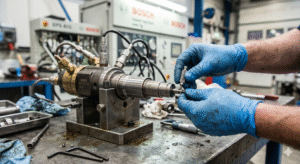
Instead of arguing with the charterer about whether to dry dock, we deploy advanced marine vibration analysis. By mounting accelerometers directly to the intermediate bearings and stern tube seal housings, we can capture the exact vibration signature of the shaft line.
Our diagnostics will immediately tell you if the frequency points to a hydrodynamic imbalance (pointing to ship propeller repair) or a mechanical misalignment/bearing failure. If it is an internal alignment issue, we can often execute laser alignment corrections while the vessel is afloat, preventing the need for a shipyard visit.
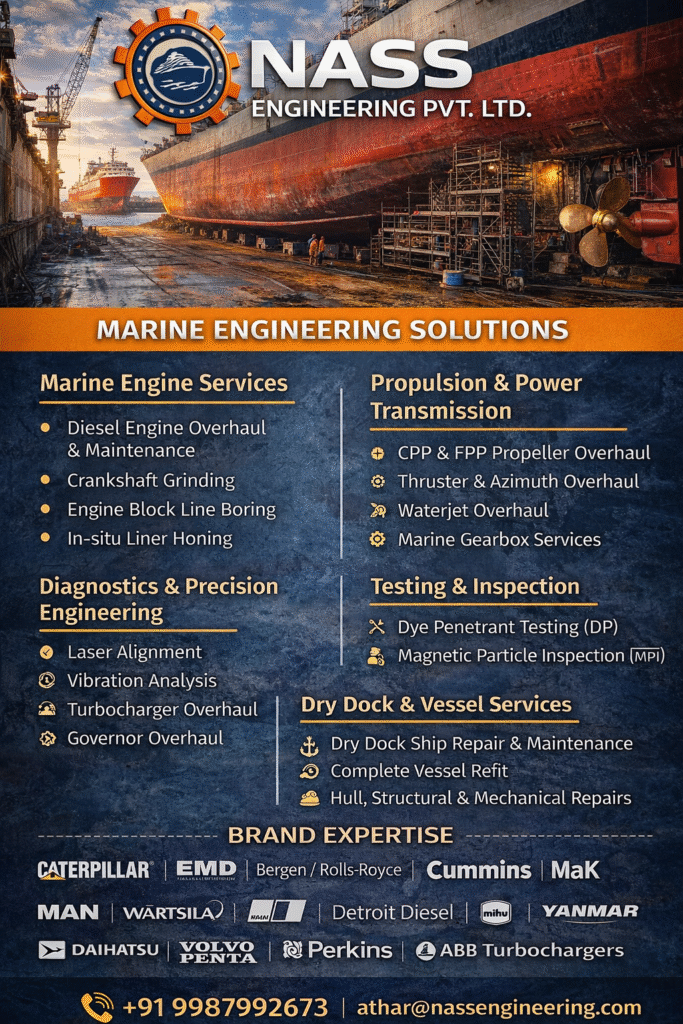
Don’t commit to a dry dock based on a feeling in the deck plates. Contact NASS Engineering’s rapid-response marine engineering services in UAE ports to get hard diagnostic data before you make a million-dollar decision.