Propulsion systems are the heart of vessel performance. Whether a ship is designed for offshore operations, defence missions, coastal navigation, or heavy-duty marine work, the choice of propulsion system plays a major role in efficiency, maneuverability, fuel economy, and long-term reliability.
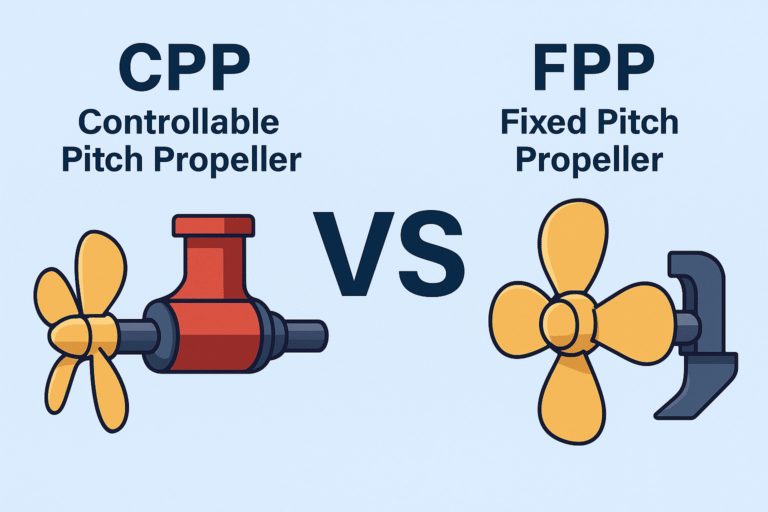
Among the most widely used propulsion setups in the marine industry are CPP (Controllable Pitch Propeller) and FPP (Fixed Pitch Propeller) systems. Each system serves a specific purpose and is engineered to deliver optimal performance under different operating conditions.
At NASS Engineering Services Pvt. Ltd., we specialize in complete CPP and FPP propulsion system overhauls, maintenance, part supply, sealing systems, and mechanical alignment, supporting vessels across marine, offshore, power, and defence sectors.
Understanding CPP & FPP Propulsion Systems
What Is a CPP (Controllable Pitch Propeller)?
A CPP system allows the angle—or pitch—of the propeller blades to be adjusted while the shaft continues to rotate at a constant speed.
This enables the vessel to:
- Change thrust direction instantly
- Control speed more precisely
- Improve fuel efficiency across varying loads
- Maintain maneuverability without changing engine RPM
CPPs are ideal for vessels that operate in dynamic, multi-speed, or variable load conditions.
What Is an FPP (Fixed Pitch Propeller)?
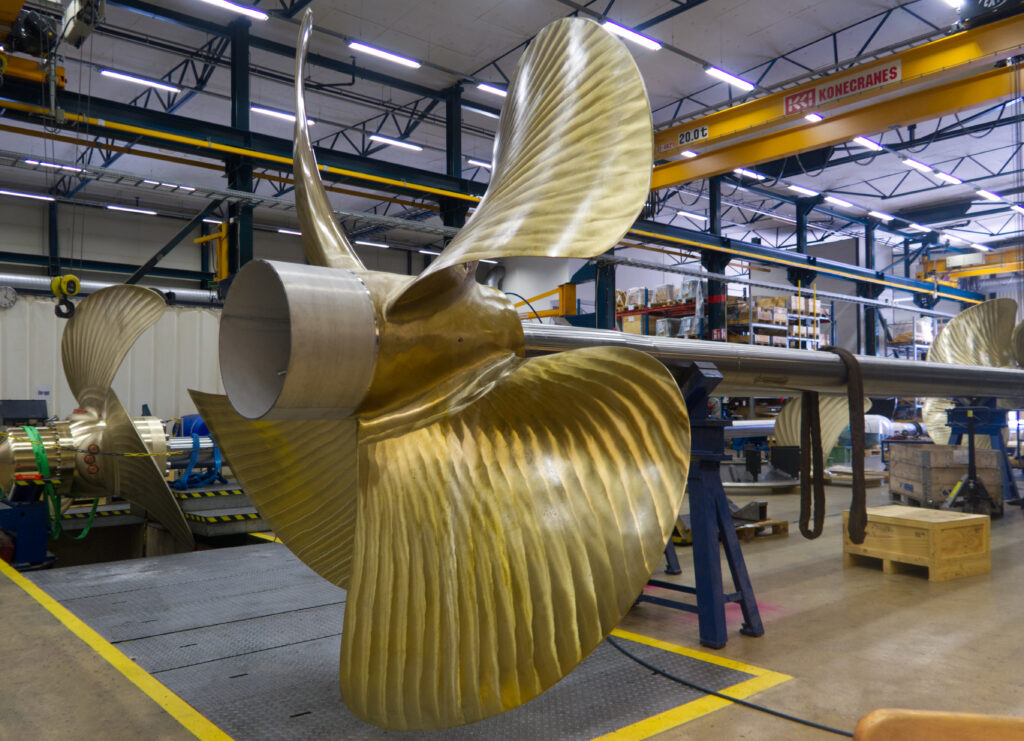
An FPP system has blades fixed permanently at a specific angle. The propeller pitch cannot be changed during operation.
FPPs are known for:
- Simple and rugged construction
- Lower manufacturing and maintenance costs
- High durability and reliability
- Excellent performance at constant speeds
FPPs are widely used in ships with consistent operational patterns, such as cargo vessels, tugs, and fishing boats.
CPP vs FPP — A Side-by-Side Technical Comparison
⚙️ Maneuverability
- CPP: Excellent control, especially during docking, reversing, or DP operation.
- FPP: Requires engine speed changes or gear movements to adjust thrust.
⚙️ Fuel Efficiency
- CPP: High efficiency across varying speed ranges.
- FPP: More efficient only at the design speed.
⚙️ Maintenance Requirements
- CPP: Complex system with more moving parts, hydraulic components, and seals.
- FPP: Lower maintenance; fewer components.
⚙️ Operating Conditions
- CPP: Best for vessels needing frequent speed changes or precision movement.
- FPP: Best for vessels operating at constant speeds.
⚙️ Cost
- CPP: Higher installation and overhaul cost.
- FPP: Cost-efficient and easier to maintain.
Which Vessels Use CPP?
CPP systems are preferred in environments where safety, maneuverability, and operational flexibility are key.
Typical applications:
- Offshore supply vessels
- Coast guard & defence vessels
- Ferries and passenger ships
- Tugs and pilot boats
- Dynamic positioning vessels
- Dredgers and research ships
These vessels benefit from CPP because they perform frequent speed adjustments, hold position in changing sea states, and require precise propulsion control.
Which Vessels Use FPP?
FPP systems are ideal when simplicity and cost-efficiency matter.
Common applications include:
- Cargo ships
- Fishing vessels
- Barges
- Workboats
- Coastal traders
- General utility vessels
These vessels usually operate at a design speed, making fixed pitch systems the most economical choice.
Common Issues Seen in CPP Systems
Even though CPP systems offer significant operational advantages, they require careful attention during operation and maintenance.
Some common issues include:
- Hydraulic oil leakage inside the hub
- Pitch control malfunction
- Blade sealing failures
- Contaminated control oil
- High vibration due to improper adjustment
- Wear of servo motors and actuators
- Water ingress into the hub
These issues can lead to thrust loss, reduced efficiency, or complete propulsion failure.
Common Issues Seen in FPP Systems
FPP systems are mechanically simpler, but they still face operational challenges such as:
- Cavitation damage on blades
- Propeller imbalance
- Shaft misalignment
- Seal wear and oil leakage
- Damage from debris or impact
- Surface erosion due to long-term seawater exposure
Routine inspection ensures that these issues do not escalate into major repairs.
CPP Propulsion System Overhaul — What It Includes
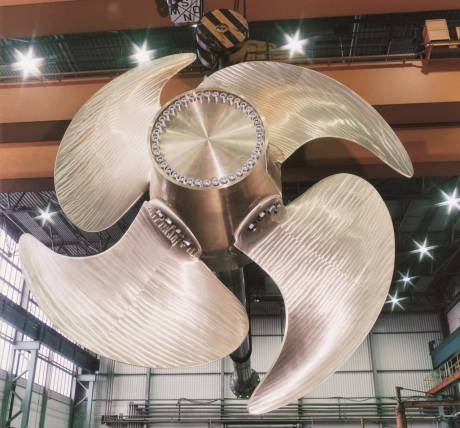
A professional CPP overhaul typically includes:
- Dismantling of hub assembly
- Blade removal and inspection
- Seal replacement
- Hydraulic system inspection
- Servo motor calibration
- O-ring and gasket replacement
- Blade foot inspection
- Non-destructive testing (NDT)
- Reassembly with torque and pitch-testing
- Oil flushing and contamination control
At NASS Engineering, these procedures follow OEM-standard protocols and certified quality guidelines.
FPP Propulsion System Overhaul — What It Includes
Overhauling an FPP propulsion system is simpler but equally important. Typical steps include:
- Shaft and stern tube inspection
- Propeller blade inspection and balancing
- Removal of corrosion, scaling, or cavitation marks
- Seal and bearing replacement
- Shaft alignment checks
- Non-destructive testing
- Polishing or reconditioning of propeller blades
A well-maintained FPP ensures consistent thrust and low vibration throughout operations.
Why CPP Isn’t Always Better — And Why FPP Isn’t Always Cheaper
Choosing between CPP and FPP depends on vessel type, operating conditions, and mission requirements.
Key considerations include:
- Does the vessel need to frequently change speed?
- Is fuel efficiency important at variable loads?
- How often will the vessel operate in DP mode?
- What is the expected lifetime cost of maintenance?
- Does the vessel require high maneuverability?
A CPP system is a performance-driven choice.
An FPP system is an efficiency-driven choice.
Each has its place — and choosing correctly ensures long-term operational success.
How NASS Engineering Supports CPP & FPP Systems
With expertise across Rolls-Royce/Ulstein, Schottel, Niigata, Kawasaki, Berg Propulsion, and Volvo Penta systems, NASS Engineering offers:
- Complete CPP & FPP overhauls
- Seal replacement and leakage rectification
- Blade reconditioning
- Propeller balancing and polishing
- Hydraulics and control unit repair
- Stern tube support
- Shaft and alignment services
- Class survey preparation
- Onboard installation & sea-trial assistance
Our certified teams ensure reliability, precision, and safety throughout every overhaul.
Where CPP Systems Outperform FPP
- Frequent stopping/starting
- Dynamic positioning
- Precise maneuvering
- Vessels with varying operational loads
- Safety-critical missions
- Defence operations
- Environments requiring thrust reversal without gearbox changes
Where FPP Systems Outperform CPP
- Long voyages at constant speed
- Cost-sensitive operations
- Vessels requiring minimal maintenance
- Harsh environments needing robust construction
- Fuel-optimized conditions at design speed
Conclusion — Choosing the Right Propulsion System
Both CPP and FPP systems offer unique advantages.
The ideal choice depends on your vessel’s purpose, operating profile, and long-term goals.
- Choose CPP if you need maximum control, flexibility, and efficiency across varied operations.
- Choose FPP if you want simplicity, reliability, and cost-efficient performance at constant speeds.
With years of experience in marine propulsion, NASS Engineering Services Pvt. Ltd. supports shipowners, offshore operators, and defence fleets with complete CPP/FPP overhaul, repair, maintenance, and technical expertise.
Contact Us for CPP/FPP Propulsion Support
📍 Navi Mumbai | Visakhapatnam | Kolkata | UAE | Saudi Arabia
📞 +91 9987992673
✉️ service@nassengineering.com
🌐 nassengineering.com