Inside Dry Docking: How Professional Refit & Overhaul Keep Vessels Sea-Ready
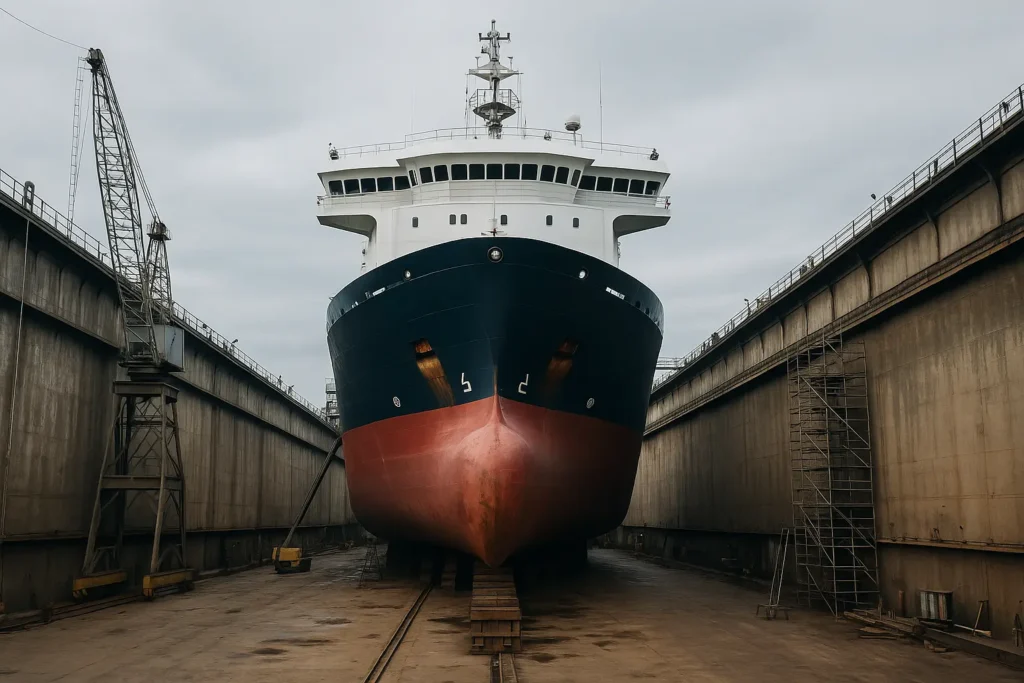
Dry docking is one of the most critical phases in a vessel’s lifecycle. It’s the only time a ship is completely accessible for structural inspection, underwater repairs, hull treatment, propulsion maintenance, and class compliance checks.From a marine engineering perspective, dry docking is not just routine maintenance — it is risk prevention, performance restoration, and operational cost control. At NASS Engineering Services Pvt. Ltd., we bring years of practical experience in marine engineering, vessel refits, propulsion overhaul, and dry-dock project execution across offshore, defence, and commercial fleets. What Is Dry Docking and Why Is It Essential? Dry docking involves taking a vessel out of water using a dry dock, slipway, or floating dock, allowing marine engineers and surveyors to perform critical underwater inspections and repair work. Dry docking is essential because it helps: Most international regulators and classification societies (IRS, DNV, ABS, LR, BV) mandate dry docking every 2–5 years, depending on vessel type. How Dry Docking Works: Step-by-Step Breakdown As marine engineering specialists, NASS follows globally accepted procedures to ensure safety and precision during dry docking. 1. Pre-Docking Inspection & Planning Before the vessel enters dock, engineers examine: A detailed docking plan is prepared covering equipment, manpower, timelines, and class survey requirements. 2. Docking the Vessel Once aligned over the keel blocks, the water is pumped out gradually. During lowering: This phase demands strict engineering oversight to avoid structural misalignment. 3. Hull Inspection & Cleaning Marine fouling is a major cause of fuel inefficiency. Key tasks include: A clean hull can improve fuel efficiency by 6–20%, depending on fouling severity. 4. Propulsion System Overhaul This is the core area where NASS specializes. During dry docking, propulsion systems such as propellers, CPP/FPP units, shafts, stern-tubes, and thrusters are completely accessible. Typical tasks include: Proper propulsion maintenance reduces vibration, improves fuel efficiency, and enhances maneuverability. 5. Hull Treatment & Coating After cleaning and surface preparation, the hull is treated with: Correct coating selection prevents corrosion and reduces long-term maintenance costs. 6. Structural & Mechanical Repairs Dry dock allows access to critical systems including: Any deformed, corroded, or worn components are repaired or replaced. 7. Class Surveys & Testing Vessels must comply with class society requirements. During dry docking, surveyors perform checks such as: Proper documentation is provided for classification renewal. 8. Re-Floating & Sea Trials After all works are completed: This ensures the ship is ready for safe operational service. Why Dry Docking Should Never Be Delayed Ignoring dry docking schedules leads to: In several industry studies, vessels that skip scheduled dry docking face up to 30% higher long-term maintenance costs. How NASS Engineering Supports Complete Dry Dock Projects With extensive experience in commercial, offshore, and defence vessels, NASS provides: • Complete Dry Dock Project Execution End-to-end management from arrival to sea trials. • Propulsion System Overhaul CPP/FPP, shafts, gearboxes, thrusters, and waterjets. • Structural & Mechanical Repairs Hull work, steel renewal, piping, rudder systems, and underwater fittings. • Electrical & Equipment Upgrades Navigation, fire systems, automation, HVAC, and power systems. • Coating & Anti-Fouling Solutions High-performance marine coatings for long-term hull protection. • Compliance Support Coordination with Class surveyors, documentation, and certification support. Best Practices for a Successful Dry Dock As marine research and engineering experts, we recommend: 1. Always conduct pre-dock inspection It ensures accurate planning and reduces delays. 2. Assign certified specialists Propulsion and hull work require trained engineers. 3. Use genuine parts Propeller seals, bearings, shafts, and blades must be OEM-grade. 4. Monitor dock block alignment Incorrect alignment can cause hull distortion. 5. Maintain a performance log Track vibration, thrust, and fuel efficiency post-dry dock. Conclusion — Dry Docking Protects Your Vessel’s Future Dry docking is not just mandatory — it is essential for ensuring: With the right engineering expertise, vessels achieve peak performance and reliability after every dry dock cycle. For trusted, certified, and technically advanced dry docking support, NASS Engineering Services Pvt. Ltd. stands as a proven marine engineering partner.
CPP vs FPP Propulsion Systems — Choosing the Right One for Your Vessel
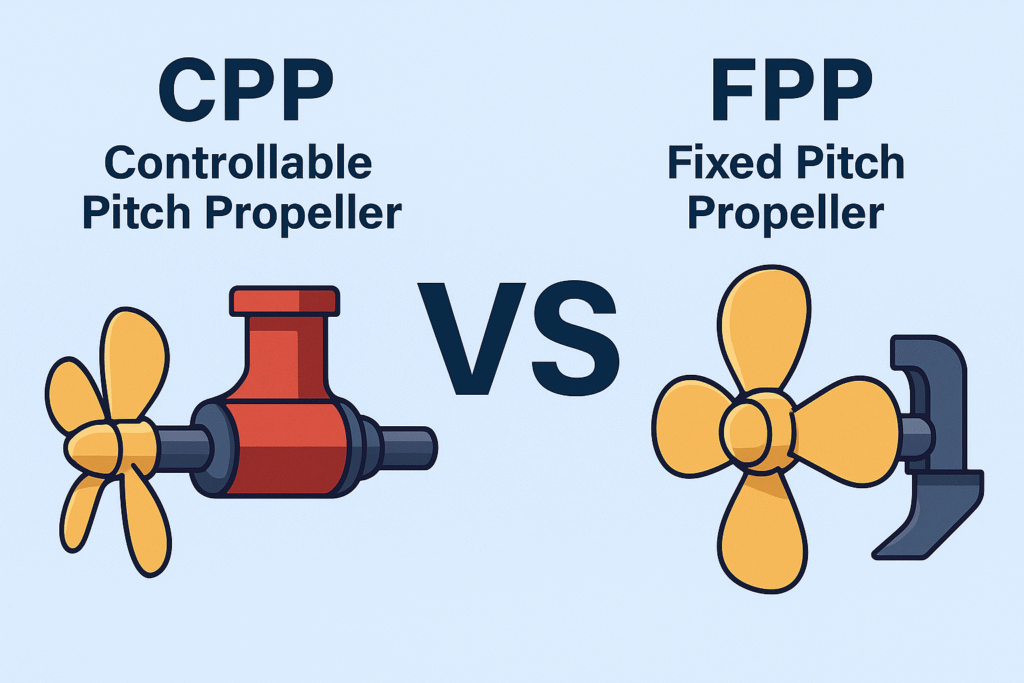
Propulsion systems are the heart of vessel performance. Whether a ship is designed for offshore operations, defence missions, coastal navigation, or heavy-duty marine work, the choice of propulsion system plays a major role in efficiency, maneuverability, fuel economy, and long-term reliability. Among the most widely used propulsion setups in the marine industry are CPP (Controllable Pitch Propeller) and FPP (Fixed Pitch Propeller) systems. Each system serves a specific purpose and is engineered to deliver optimal performance under different operating conditions. At NASS Engineering Services Pvt. Ltd., we specialize in complete CPP and FPP propulsion system overhauls, maintenance, part supply, sealing systems, and mechanical alignment, supporting vessels across marine, offshore, power, and defence sectors. Understanding CPP & FPP Propulsion Systems What Is a CPP (Controllable Pitch Propeller)? A CPP system allows the angle—or pitch—of the propeller blades to be adjusted while the shaft continues to rotate at a constant speed.This enables the vessel to: CPPs are ideal for vessels that operate in dynamic, multi-speed, or variable load conditions. What Is an FPP (Fixed Pitch Propeller)? An FPP system has blades fixed permanently at a specific angle. The propeller pitch cannot be changed during operation. FPPs are known for: FPPs are widely used in ships with consistent operational patterns, such as cargo vessels, tugs, and fishing boats. CPP vs FPP — A Side-by-Side Technical Comparison ⚙️ Maneuverability ⚙️ Fuel Efficiency ⚙️ Maintenance Requirements ⚙️ Operating Conditions ⚙️ Cost Which Vessels Use CPP? CPP systems are preferred in environments where safety, maneuverability, and operational flexibility are key. Typical applications: These vessels benefit from CPP because they perform frequent speed adjustments, hold position in changing sea states, and require precise propulsion control. Which Vessels Use FPP? FPP systems are ideal when simplicity and cost-efficiency matter. Common applications include: These vessels usually operate at a design speed, making fixed pitch systems the most economical choice. Common Issues Seen in CPP Systems Even though CPP systems offer significant operational advantages, they require careful attention during operation and maintenance.Some common issues include: These issues can lead to thrust loss, reduced efficiency, or complete propulsion failure. Common Issues Seen in FPP Systems FPP systems are mechanically simpler, but they still face operational challenges such as: Routine inspection ensures that these issues do not escalate into major repairs. CPP Propulsion System Overhaul — What It Includes A professional CPP overhaul typically includes: At NASS Engineering, these procedures follow OEM-standard protocols and certified quality guidelines. FPP Propulsion System Overhaul — What It Includes Overhauling an FPP propulsion system is simpler but equally important. Typical steps include: A well-maintained FPP ensures consistent thrust and low vibration throughout operations. Why CPP Isn’t Always Better — And Why FPP Isn’t Always Cheaper Choosing between CPP and FPP depends on vessel type, operating conditions, and mission requirements.Key considerations include: A CPP system is a performance-driven choice.An FPP system is an efficiency-driven choice. Each has its place — and choosing correctly ensures long-term operational success. How NASS Engineering Supports CPP & FPP Systems With expertise across Rolls-Royce/Ulstein, Schottel, Niigata, Kawasaki, Berg Propulsion, and Volvo Penta systems, NASS Engineering offers: Our certified teams ensure reliability, precision, and safety throughout every overhaul. Where CPP Systems Outperform FPP Where FPP Systems Outperform CPP Conclusion — Choosing the Right Propulsion System Both CPP and FPP systems offer unique advantages.The ideal choice depends on your vessel’s purpose, operating profile, and long-term goals. With years of experience in marine propulsion, NASS Engineering Services Pvt. Ltd. supports shipowners, offshore operators, and defence fleets with complete CPP/FPP overhaul, repair, maintenance, and technical expertise. Contact Us for CPP/FPP Propulsion Support 📍 Navi Mumbai | Visakhapatnam | Kolkata | UAE | Saudi Arabia📞 +91 9987992673✉️ service@nassengineering.com🌐 nassengineering.com
